A Dermatologist Informed Guide 2026
Medically reviewed by: [Dermatologist Name, Credentials]
Disclaimer: This article is for skincare education only and isn’t a substitute for medical advice. Retinoids can cause irritation and aren’t recommended during pregnancy; breastfeeding users should consult their doctor before use. Product prices and availability can change. No affiliate relationship is assumed unless explicitly disclosed by the publisher.
What Is the Best Medicated Retinol Serum in Pakistan?
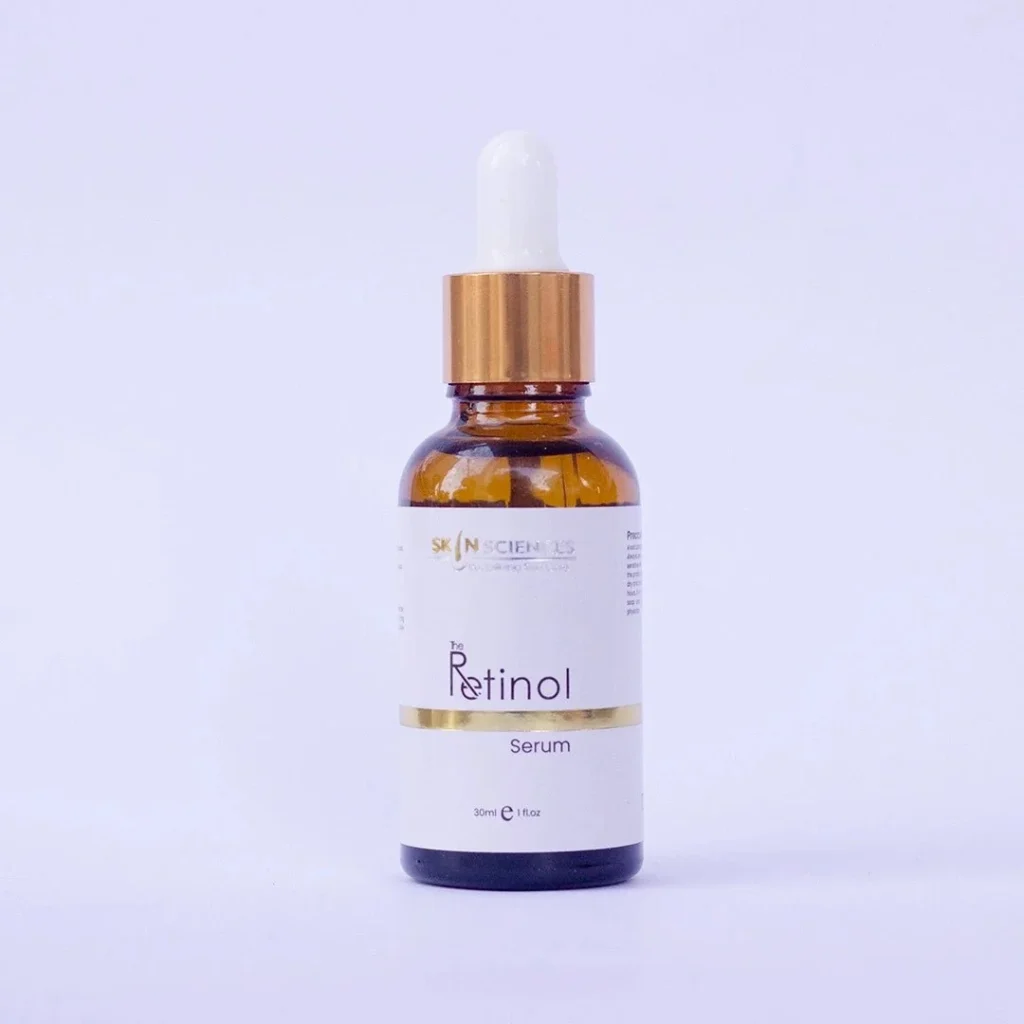
For an accessible, gentle option, Skin Sciences Retinol Serum is a strong choice because its current formula uses 1% retinyl palmitate rather than high-strength prescription retinoic acid. At Rs. 3,899, it offers a milder vitamin-A approach for fine lines, texture and pigmentation concerns, particularly for people beginning retinoid skincare.
The word “medicated” needs a little clarification. In Pakistan, skincare retailers often use it broadly for treatment-focused products, but an OTC retinol serum isn’t equivalent to prescription tretinoin. Tretinoin is already retinoic acid, whereas retinol and retinyl palmitate require conversion in the skin.
For readers specifically searching for the best medicated retinol serum in Pakistan, the better question is: Which vitamin-A formula provides the right balance of strength, tolerability, packaging, authenticity and price for my skin?
What Does Medicated Retinol Serum Actually Mean?
A medicated retinol serum usually means a treatment-focused vitamin-A skincare product, but OTC retinol shouldn’t be confused with prescription tretinoin.
Retinol is a vitamin-A derivative used in cosmetic and dermatological skincare. Skin enzymes gradually convert it into retinaldehyde and ultimately retinoic acid, the biologically active form. Tretinoin skips those conversion steps because it is already retinoic acid.
That distinction affects both strength and irritation.
A prescription retinoid may be appropriate when someone has significant acne, photoaging or another diagnosed skin condition, but it should be selected with a dermatologist. An OTC serum is generally more practical for people who want to address early fine lines, uneven texture, acne marks or pigmentation without immediately moving to prescription treatment.
For Pakistani skin, the context matters. Strong sunlight, outdoor exposure, heat and concerns about post-acne pigmentation make daily sun protection especially important. Retinoids also aren’t something to rush.
A product that causes persistent peeling isn’t necessarily working better.
Which Form of Retinol Is Best for Pakistani Skin?
For beginners, a lower-irritation vitamin-A derivative or a well-formulated encapsulated retinol can be easier to tolerate than an aggressive conventional formula.
The major forms you’ll encounter include retinol, retinaldehyde, retinyl palmitate and encapsulated retinol.
| Form | Relative potency | Irritation risk | Stability considerations | Best for |
| Retinol | Moderate | Moderate | Sensitive to light/air | Experienced beginners and anti-aging routines |
| Retinaldehyde | Higher than retinol | Moderate–higher | Requires good packaging | Users already accustomed to retinoids |
| Retinyl palmitate | Gentler | Lower | Generally easier to formulate | Beginners and sensitive skin |
| Encapsulated retinol | Depends on concentration | Potentially lower | Designed for controlled delivery | Beginners wanting gradual release |
Encapsulation doesn’t magically make retinol irritation-free. Its purpose is to help protect the active ingredient and release it more gradually. AccuFix, for example, currently lists a 1% encapsulated retinol formula using time-release technology alongside panthenol and niacinamide.
Skin Sciences takes a different approach. Its current Retinol Serum lists 1% retinyl palmitate, a milder vitamin-A ester, at Rs. 3,899.
That distinction is important when comparing products. A label saying “1% retinol” isn’t automatically equivalent to “1% retinyl palmitate.”
What Percentage of Retinol Should You Start With?
Most first-time users should start around 0.1%–0.3% actual retinol, or choose a gentler vitamin-A derivative, and use it only a few nights per week initially.
There isn’t one universally correct percentage because the ingredient form, vehicle, formulation and individual skin tolerance all matter.
| Strength | Who it suits | What to expect | Typical starting frequency |
| 0.1%–0.3% | First-time users, sensitive skin | Gradual texture and tone improvement | 2 nights/week |
| 0.3%–0.5% | Beginners with some tolerance | More noticeable retinoid activity | 2–3 nights/week |
| 0.5%–1% | Experienced users | Stronger anti-aging/texture support | 2–4 nights/week initially |
| Above 1% | Experienced users only | Higher irritation potential | Introduce cautiously |
For many Pakistani beginners, 0.3%–0.5% actual retinol is a practical middle ground, but this shouldn’t be interpreted as a universal prescription.
One field observation worth keeping in mind: after comparing ingredient lists and usage instructions across several retinoid products sold in Pakistan, the biggest difference isn’t always the headline percentage. Packaging, supporting ingredients and how slowly someone introduces the product often make a bigger difference to whether they can actually keep using it.
Which Medicated Retinol Serums Are Available in Pakistan in 2026?
Pakistan’s market includes gentle retinyl-palmitate products, encapsulated retinol, conventional retinol and high-strength OTC formulas, so comparing the actual ingredient form matters more than the word “medicated.”
| Product | Form and percentage | Key ingredients | Listed price PKR | Best for |
| Skin Sciences Retinol Serum | 1% retinyl palmitate | Retinyl palmitate | 3,899 | Beginners seeking a gentler vitamin-A option |
| AccuFix Encapsulated Retinol + B5 | 1% encapsulated retinol | B5, niacinamide, vitamin C | 3,495 | Gradual delivery and barrier support |
| AccuFix Retin-Oil | 0.2%–1% retinyl palmitate range | Squalane, vitamin E, vitamin C | From 2,395 | Beginners and dry/sensitive skin |
| ACM Duolys-A | Retinol + tocopheryl retinoate | Jojoba oil, sunflower oil | 6,875 | Targeted anti-aging skincare |
| Derresthetic Retiac | 2.5% retinol | HA, vitamin E, aloe vera | 3,000 | Experienced users seeking high strength |
| Saeed Ghani Retinol Night Serum | Retinyl palmitate | Squalane, vitamin E | 1,250 | Budget-conscious users |
Current listings support these prices and formulations, although stock and retailer pricing can change. Skin Sciences currently lists its Retinol Serum at Rs. 3,899 and identifies 1% retinol palmitate as its active vitamin-A form. AccuFix lists its encapsulated formula at Rs. 3,495 and its Retin-Oil range from Rs. 2,395.
ACM Duolys-A is currently listed at Rs. 6,875 on Derma.pk and combines retinol with tocopheryl retinoate. Derresthetic Retiac is listed at Rs. 3,000 but contains a much higher stated 2.5% retinol concentration, making it a poor starting point for someone completely new to retinoids.
Saeed Ghani’s official product page currently lists its Retinol Skin Recharge & Anti-Aging Night Serum at Rs. 1,250 and identifies retinyl palmitate in the ingredient list.
Where Skin Sciences fits: its main advantage is the gentler retinyl-palmitate format and a locally available price point. AccuFix offers an alternative if encapsulated retinol and barrier-supporting ingredients are your priority. High-strength products such as Retiac serve a different, more experienced user.
Why Does Skin Sciences Retinol Serum Stand Out in Pakistan?
Skin Sciences stands out as a locally available option because its current Retinol Serum uses 1% retinyl palmitate and is positioned as a gentler overnight vitamin-A treatment at Rs. 3,899.
Key points to consider:
- Dermatologist-informed positioning: Skin Sciences states that its products are developed by American Board Certified Dermatologists.
- Gentler vitamin-A form: The product uses 1% retinyl palmitate, rather than claiming to contain 1% pure retinol.
- Beginner-friendly positioning: The brand recommends starting two to three times weekly and gradually increasing frequency.
- Multiple skin concerns: The product is positioned around fine lines, texture, pigmentation and acne marks.
- Local availability: Buying directly from an established Pakistani brand can make authenticity and replenishment simpler than relying on random imported sellers.
- Price transparency: The current listed price is Rs. 3,899, although promotions can change the final amount.
The important caveat is that retinyl palmitate is milder than conventional retinol. If someone specifically wants a stronger retinoid effect, they may prefer an actual retinol or dermatologist-prescribed tretinoin instead.
How Do You Identify a High-Quality Retinol Serum From Its Packaging and Label?
A quality retinoid product should clearly identify its vitamin-A form and concentration and use packaging designed to protect sensitive ingredients from light and air.
Before buying, check:
- The exact vitamin-A form: Retinol, retinaldehyde, retinyl palmitate or another derivative should be clearly named.
- Concentration disclosure: Don’t assume “retinol complex” means a specific percentage of active retinol.
- Opaque or protective packaging: Retinoids are sensitive to environmental conditions, so protective packaging is preferable.
- Airless or controlled-dispensing packaging: This can reduce repeated exposure to air.
- Encapsulation information: If the product claims encapsulated retinol, the label should actually identify it.
- Barrier-supporting ingredients: Niacinamide, panthenol, ceramides, squalane and moisturising ingredients can make a retinoid routine easier to tolerate.
- Avoid relying on a clear dropper alone: Transparent packaging can expose light-sensitive formulations to more environmental stress.
- Authenticity: Buy from the manufacturer’s official store, a reputable pharmacy or an authorised seller whenever possible.
Packaging can’t compensate for a poorly designed formula, but it is one useful part of evaluating a retinoid.
How Should You Apply Retinol Serum in Pakistan’s Climate?
Apply retinol at night to completely dry skin, start two or three nights per week, moisturize afterward and use broad-spectrum SPF every morning.
A simple beginner routine
- Cleanse gently. Remove sunscreen, makeup, sweat and pollution without aggressively scrubbing.
- Let the skin dry. Damp skin can increase penetration and may make irritation more noticeable.
- Use a pea-sized amount. Spread a thin layer over the face rather than applying multiple drops.
- Avoid sensitive areas. Keep it away from the eyelids, corners of the nose and lips unless your dermatologist advises otherwise.
- Moisturize. A barrier-supporting moisturizer can reduce dryness.
- Start slowly. Two nights per week is enough initially.
- Increase gradually. If your skin remains comfortable after several weeks, move toward three nights and then more frequently if appropriate.
- Use SPF every morning. SPF 30–50+ broad-spectrum protection is essential.
What is the retinol sandwich method?
For beginners, the sandwich method means applying moisturizer, then retinol, followed by another thin layer of moisturizer.
It’s particularly useful if your skin becomes dry or reactive. The goal isn’t to make retinol ineffective; it’s to improve comfort and help you maintain a consistent routine.
Pakistan’s strong sun exposure makes morning sunscreen particularly important. Retinoid use and sun protection should be considered a pair, not two unrelated skincare steps.
What Mistakes Should You Avoid When Using Retinol in Pakistan?
Most beginner problems come from using too much, too often or combining several irritating actives before the skin has adapted.
Avoid these common mistakes:
- Starting with the strongest percentage available. A 2.5% retinol product isn’t automatically better for a beginner.
- Using retinol every night immediately. Give your skin time to adapt.
- Applying more product. More retinol doesn’t mean faster results.
- Skipping SPF. UV exposure can worsen pigmentation and photoaging.
- Layering multiple exfoliants. Avoid casually combining retinol with AHAs, BHAs or scrubs on the same night.
- Adding several new products at once. If irritation appears, you won’t know which product caused it.
- Assuming every breakout is a purge. Persistent burning, swelling or severe acne isn’t something to simply “push through.”
- Using retinoids during pregnancy. Avoid topical retinoids during pregnancy and discuss alternatives with your healthcare professional.
- Ignoring breastfeeding considerations. Ask your doctor before using retinoids while breastfeeding.
- Using expired or poorly stored products. Heat and direct sunlight aren’t ideal for retinoid products.
A mild adjustment period can include dryness, tightness or flaking. Severe irritation is a different matter and warrants stopping the product and seeking professional advice.
Frequently Asked Questions About Retinol in Pakistan
Can I use retinol serum if I have sensitive skin?
Yes, but sensitive skin generally benefits from a lower-irritation approach. Consider retinyl palmitate or a lower-strength/encapsulated formula, apply it only two nights weekly initially and use moisturizer. Patch testing can also help. If you have eczema, rosacea or persistent irritation, ask a dermatologist before starting.
How long does it take to see results from retinol?
Retinol isn’t an overnight treatment. Early changes in smoothness and texture may appear after several weeks, while fine lines, pigmentation and other photoaging concerns generally require consistent use for several months. Individual results vary with concentration, frequency, skin condition and daily sun protection.
Can I use retinol with vitamin C or niacinamide?
Yes, but how you combine them matters. Niacinamide is generally easy to pair with retinoids and may support the skin barrier. Vitamin C can also be used in the same overall routine, but beginners may find it more comfortable to use vitamin C in the morning and retinol at night.
Is retinol safe during pregnancy?
Topical retinoids, including retinol, are generally avoided during pregnancy because they are vitamin-A derivatives. If you’re pregnant, trying to conceive or unsure about your skincare routine, stop and discuss suitable alternatives with your doctor or dermatologist rather than choosing a retinoid yourself.
Where can I buy Skin Sciences retinol serum in Pakistan?
Skin Sciences Retinol Serum is currently listed on the brand’s official Pakistani website at Rs. 3,899. The product page identifies it as a 1% retinyl-palmitate serum. Check the official listing for current stock, pricing and delivery information before ordering.
Does retinol make skin thinner?
No. Properly used retinoids don’t simply make healthy skin “thinner.” They increase epidermal turnover and support collagen-related changes in the dermis. Temporary dryness, peeling and sensitivity can make skin feel thinner during the adjustment period. Excessive use, however, can damage the skin barrier and cause significant irritation.
Final Thoughts:
The right retinoid isn’t necessarily the strongest one. For beginners looking for a locally available, gentler vitamin-A option, Skin Sciences Retinol Serum, with 1% retinyl palmitate and a current listed price of Rs. 3,899, is a practical choice to consider.
Start slowly, moisturize, wear SPF every morning and don’t confuse an OTC retinol product with prescription tretinoin. If you have sensitive skin, significant acne, pregnancy-related concerns or uncertainty about which strength to use, a dermatologist can help you choose safely.