
A Dermatologist-Informed Guide (2026)
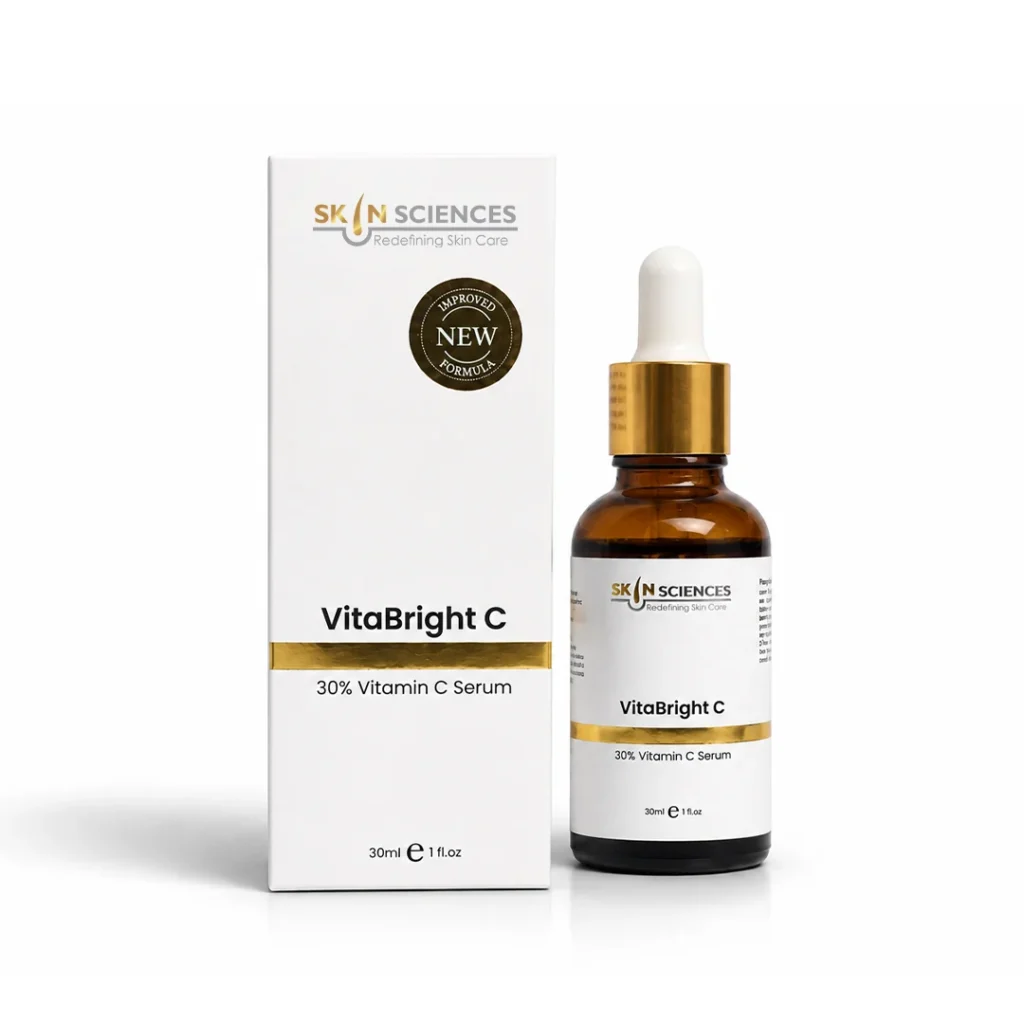
If you’re searching for the best medicated vitamin C serum in Pakistan, SkinSciences Vitabright C is one local option to consider, currently listed at Rs. 3,899. It contains ascorbic acid alongside niacinamide and hydrating ingredients and is marketed for dullness, dark spots and uneven tone. For sensitive skin, stable derivatives such as 10% sodium ascorbyl phosphate may be easier to tolerate.
What Does “Medicated” Vitamin C Serum Actually Mean?
“Medicated” vitamin C serum isn’t a standardized category that automatically means a product is a prescription medicine. In Pakistan, the term is commonly used for pharmacy-sold, dermatologist-positioned, or treatment-focused skincare products, so the ingredient list matters more than the label.
A pharmacy vitamin C serum Pakistan shoppers see on shelves may be a cosmetic formulation, while another product may be marketed through pharmacies because of its clinical positioning. That distinction matters when you’re dealing with pigmentation.
For Pakistani skin, vitamin C is commonly considered for concerns such as:
- Dull or uneven-looking skin
- Post-acne marks
- Sun-related pigmentation
- Mild hyperpigmentation
- Uneven skin tone
- Early visible signs of photoaging
Sun exposure is particularly relevant. Pakistan has strong year-round UV exposure in many regions, and pigmentation can become more noticeable when sunscreen use is inconsistent.
Vitamin C is an antioxidant. It can help neutralize reactive oxygen species and is also involved in collagen synthesis. However, it doesn’t replace sunscreen, and a serum shouldn’t be described as a treatment that permanently removes melasma or dark spots.
SkinSciences currently lists its Vitabright C at Rs. 3,899, with ascorbic acid, niacinamide, glycerine, sodium hyaluronate and other supporting ingredients. The brand states that its products are developed by American Board Certified Dermatologists for Pakistani skin.
Which Form of Vitamin C Is Best for Pakistani Skin?
There isn’t one vitamin C form that’s best for everyone; L-ascorbic acid is the most direct and extensively studied topical form, while stable derivatives can be useful when irritation or storage stability is a concern.
| Vitamin C form | Typical strength | Stability | Best suited for |
| L-ascorbic acid | 10–20% | Lower | Experienced users targeting pigmentation and photoaging |
| 3-O-ethyl ascorbic acid | Varies by formula | Better | Users wanting a more stable derivative |
| Sodium ascorbyl phosphate (SAP) | 5–15% | High | Sensitive or acne-prone skin |
| Magnesium ascorbyl phosphate (MAP) | Varies | High | Dry/sensitive skin and gentler routines |
Why does L-ascorbic acid need special attention?
L-ascorbic acid is the pure form of vitamin C, but it’s also relatively unstable. Its effectiveness depends on formulation factors including concentration, pH, oxygen exposure, light and storage conditions.
For a traditional L-ascorbic acid serum, a low-pH formula—generally below about 3.5—is commonly used to improve penetration.
That doesn’t mean every excellent vitamin C serum must contain LAA.
A derivative such as 3-O-ethyl ascorbic acid may offer better formulation stability, while SAP is particularly interesting for people who don’t tolerate acidic LAA products well.
This becomes even more relevant in Pakistan because heat during transport and storage can accelerate oxidation. Don’t leave a vitamin C bottle on a sunny bathroom shelf or inside a hot car.
What Percentage of Vitamin C Should You Use?
For many adults, 10–15% is a practical starting range for L-ascorbic acid, while beginners and sensitive-skin users may prefer a lower concentration or a stable derivative.
| Vitamin C concentration | Who may consider it | What to expect |
| 5–10% | Beginners and sensitive skin | Gentler introduction to vitamin C |
| 10–15% | Most regular users | Useful balance between potency and tolerability |
| 15–20% | Experienced users | Stronger formulation, potentially more irritation |
| Above 20% | Usually unnecessary for beginners | Greater irritation potential without automatically meaning better results |
More isn’t always better.
A well-formulated 10% product that remains stable can be more practical than a poorly packaged 20% serum that oxidizes quickly.
If you’re specifically searching for an L-ascorbic acid serum Pakistan shoppers can use for pigmentation, check the actual percentage rather than relying on front-label phrases such as “high potency” or “professional strength.”
Which Medicated Vitamin C Serums Are Available in Pakistan? (2026 Comparison)
Pakistan has several vitamin C options ranging from pharmacy-oriented L-ascorbic acid products to more stable derivative formulas; SkinSciences, Frulic-C, Siero-C, HYLO-C, AccuFix and ChiltanPure represent different approaches rather than identical formulas.
Price note: Prices below are approximate/current listed prices found during research in September 2026 and can change with promotions, stock and seller.
The differences are worth understanding.
SkinSciences Vitabright C is positioned as a dermatology-inspired local option and is currently listed at Rs. 3,899. Its published ingredient list includes ascorbic acid, niacinamide, sodium hyaluronate and glycerine.
Frulic-C is particularly interesting if you’re looking for the classic antioxidant combination. Current pharmacy listings identify L-ascorbic acid, alpha tocopherol and ferulic acid, while the manufacturer’s product information describes a 15% vitamin C formulation.
Siero-C is another pharmacy-listed option containing L-ascorbic acid, with D.Watson currently listing the 30ml serum around Rs. 2,200.
For sensitive skin, AccuFix’s 10% SAP formula takes a different approach. Sodium ascorbyl phosphate is more stable than pure LAA and doesn’t require the same low-pH environment. The product also contains hyaluronic acid and allantoin.
ChiltanPure is a budget option, currently listing a 30ml vitamin C serum at Rs. 750, although its current product page doesn’t provide enough formulation detail to treat concentration as a meaningful comparison point.
This is why there isn’t a single formula that suits every person.
How Do You Identify a High-Quality Vitamin C Serum?
A high-quality vitamin C serum should disclose its vitamin C form, concentration where appropriate, supporting ingredients and suitable storage instructions rather than relying mainly on marketing claims.
Use this checklist before buying:
- Check the vitamin C form: LAA, SAP, MAP and 3-O-ethyl ascorbic acid behave differently.
- Look for the concentration: A stated percentage is more useful than “maximum strength.”
- For LAA, check pH: Formulas designed around pure LAA are commonly acidic, often below pH 3.5.
- Look for antioxidant partners: Ferulic acid and tocopherol/vitamin E can complement vitamin C formulations.
- Prefer protective packaging: Opaque, UV-protective or airless packaging can reduce exposure to light and air.
- Be cautious with clear dropper bottles: They’re not automatically ineffective, but they offer less protection from light.
- Check the batch and expiry date: Particularly important when buying from marketplace sellers.
- Check storage instructions: Heat can accelerate degradation.
- Buy from a reliable seller: Authenticity matters as much as the ingredient list.
A useful field note from comparing currently listed Pakistani products is that formula transparency varies considerably. Some sellers disclose exact percentages and INCI lists, while others simply say “vitamin C.” That makes it difficult to compare products fairly and it’s a reason not to choose solely on price or claims.
How Should You Apply Vitamin C Serum in Pakistan’s Climate?
The simplest approach is to use vitamin C in the morning, followed by moisturizer and broad-spectrum sunscreen; vitamin C supports antioxidant protection but does not replace SPF.
A practical morning routine
- Cleanse gently. Use a cleanser appropriate for your skin type.
- Dry your skin. If you’re using an acidic LAA serum and are irritation-prone, completely dry skin may feel more comfortable.
- Apply vitamin C. Use the amount recommended on the product label—often a few drops.
- Allow it to settle. Give the serum a short period to absorb.
- Apply moisturizer. This is particularly useful for dry or sensitive skin.
- Finish with SPF 50+. Use adequate sunscreen and reapply when prolonged outdoor exposure requires it.
The sunscreen step isn’t optional if your goal is pigmentation management.
Vitamin C doesn’t make sunscreen unnecessary, and topical vitamin C shouldn’t be promoted as a substitute for UV protection.
SkinSciences itself recommends applying its vitamin C serum to clean, dry skin and pairing daytime use with sunscreen.
If you’re new to vitamin C, start every other morning rather than immediately applying a strong LAA formula twice daily.
What Mistakes Should You Avoid When Buying Vitamin C Serum in Pakistan?
The most common buying mistakes are choosing a serum based only on percentage, ignoring packaging, and assuming “medicated” automatically means medically superior.
Avoid these errors:
- Buying a clear bottle without considering light exposure.
- Assuming 20% is automatically better than 10%.
- Choosing a product because it says “miracle,” “instant whitening,” or “permanent pigmentation removal.”
- Skipping a patch test if your skin is reactive.
- Using vitamin C alongside too many strong actives at once.
- Ignoring storage instructions.
- Buying unusually cheap products from an unknown seller.
- Continuing to use a heavily oxidized product.
- Expecting vitamin C alone to treat melasma.
- Skipping sunscreen while trying to fade dark spots.
What does oxidized vitamin C look like?
Fresh vitamin C products can vary in color depending on their formulation, but a significant shift toward dark yellow, orange or brown, particularly with changes in smell or texture, can indicate oxidation.
When in doubt, follow the manufacturer’s storage and replacement instructions rather than trying to “rescue” an old serum.
Frequently Asked Questions (FAQ)
Can I use vitamin C serum if I have sensitive skin?
Yes, but the form and concentration matter. Sensitive skin may tolerate a stable derivative such as sodium ascorbyl phosphate better than a highly acidic L-ascorbic acid formula. Start slowly, patch test first, and stop if you develop persistent burning, swelling or significant irritation.
How long does it take to see results?
Vitamin C isn’t an overnight pigmentation treatment. Some people notice improved brightness within several weeks, while dark spots and uneven tone generally require consistent skincare and sun protection over a longer period. Results vary according to the cause and depth of pigmentation, formulation, frequency of use and sunscreen habits.
Can I use vitamin C with niacinamide or retinol?
Vitamin C and niacinamide can generally be incorporated into the same routine when the formulas are well tolerated. Retinol can also be part of a broader routine, but beginners may prefer vitamin C in the morning and retinol at night to reduce the chance of irritation. Introduce one active at a time.
Is expensive vitamin C serum always better?
No. Price doesn’t establish formulation quality. A lower-priced serum with a stable vitamin C form, sensible concentration, protective packaging and a transparent ingredient list can be a better fit than a more expensive product. Compare the formulation, packaging, authenticity and your skin’s tolerance rather than relying on price alone.
Where can I buy medicated vitamin C serum in Pakistan?
Look for reputable pharmacies, established skincare retailers and official brand websites. For SkinSciences, Vitabright C is currently listed on the brand’s official website at Rs. 3,899. Pharmacy-listed alternatives include Frulic-C and Siero-C. Always check the seller, batch information, expiry date and packaging before using a product.
Does vitamin C serum expire?
Yes. Vitamin C formulations can lose stability over time, particularly when repeatedly exposed to oxygen, heat and light. Check the expiry or PAO information and follow the manufacturer’s storage instructions. If the serum develops a marked brown/orange color or otherwise changes substantially, don’t assume it is still suitable for use.
Which Vitamin C Serum Should You Choose for Your Skin?
The most suitable choice depends on your skin’s tolerance, pigmentation concern, desired vitamin C form and budget—not simply the word “medicated” on the packaging.
For shoppers wanting a locally available dermatology-positioned product, SkinSciences Vitabright C is one option, currently listed at Rs. 3,899.
If you specifically want the classic L-ascorbic acid plus antioxidant approach, Frulic-C is worth comparing. If sensitivity and stability are bigger concerns, a 10% SAP product such as AccuFix offers a different formulation strategy.
For hyperpigmentation, remember that vitamin C works best as part of a broader routine. Consistent sunscreen, appropriate treatment ingredients and patience matter more than chasing the strongest serum.
Final Verdict
The best vitamin C serum depends on your skin type, the form of vitamin C, concentration, formulation stability, packaging and your skincare goals. SkinSciences Vitabright C is one locally available option for people looking for a dermatology-positioned vitamin C serum in Pakistan.
If your main concern is hyperpigmentation or dark spots, consistency matters more than choosing the highest concentration available. Use vitamin C alongside a suitable moisturizer and broad-spectrum sunscreen for a balanced routine.
Before buying, check the ingredient list and packaging. Your skin deserves evidence, not hype.